Heatstroke Response & Log Kit
Creates the plan documents and site poster, then watches your records
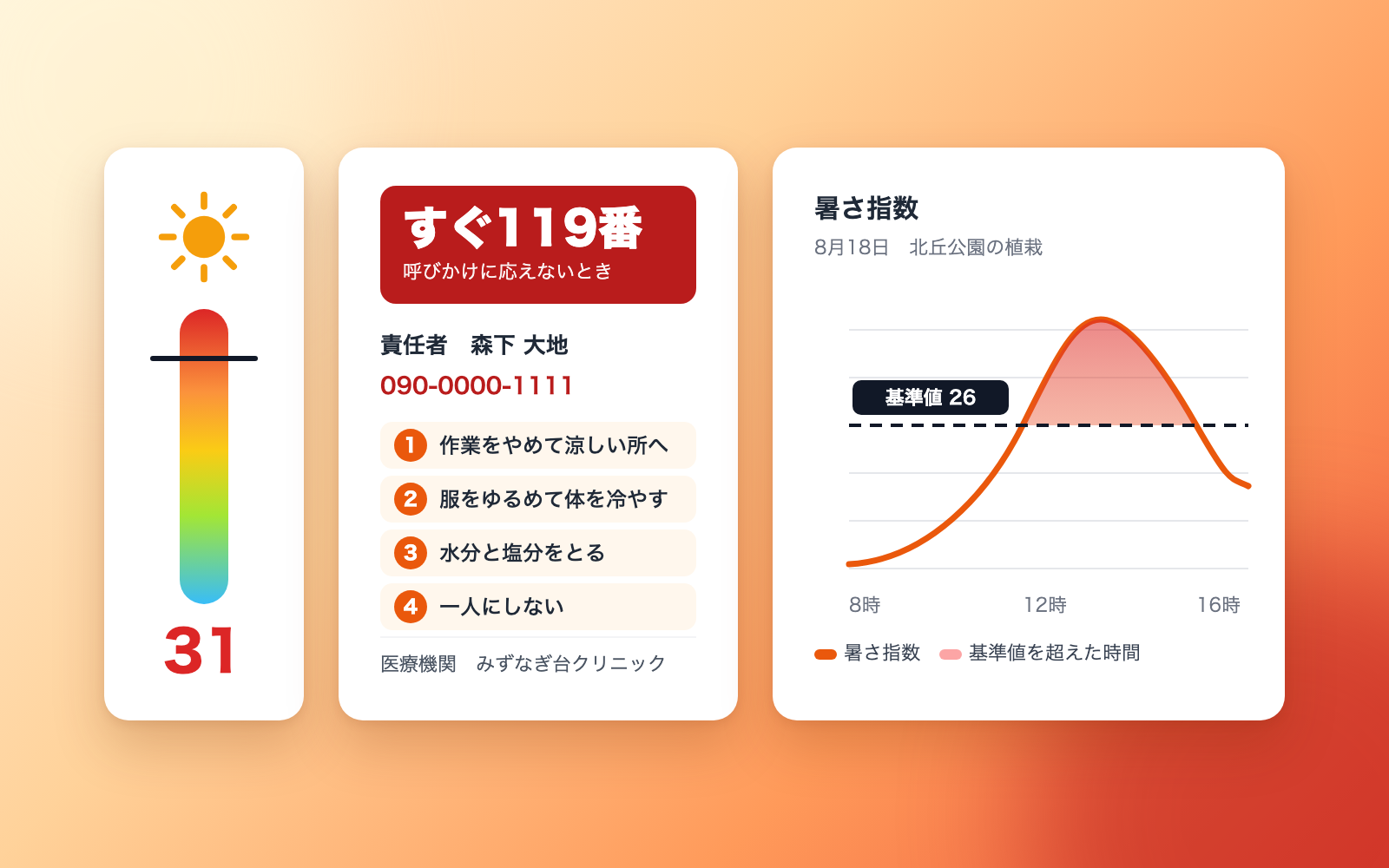
Heatstroke Response & Log Kit is a vibe coding kit for Claude Code and Codex. Creates the plan documents and site poster, then watches your records. It includes 8 fixes for pitfalls the maker hit in real work. Free.
When this helps
Heatstroke plans became mandatory, but deciding what to set, how to tell workers, and how to log it is often guesswork
What it does
Creates the documents required for Japan's mandatory heatstroke response plan (who to notify when someone feels unwell, and the steps to pull them from work, cool them down, and get them to a doctor), plus an A4 poster for the worksite. Log WBGT heat-index readings (from a meter or Japan's Ministry of the Environment) along with work and health checks, and the kit watches for days that exceed the threshold, rest-break guidance, workers not yet acclimatized, and gaps in the records. It also keeps a record whenever heatstroke is suspected, counts days off from the first day missed to the day the worker returns, and prepares the handoff brief for a workplace-injury-report kit.
The fixes baked into this kit
- Predicted WBGT values come through as "310" instead of 31.0Japan's Ministry of the Environment predicted-value CSVs store the index as the value times 10. The kit detects this by format and divides by 10, while reading observed values as-is.
- CSV time "24:00" breaks parsing and drops the last reading24:00 is read as 0:00 the next day, and still-empty, not-yet-observed time slots are skipped instead of causing an error.
- Thresholds get built from the outdated, repealed guideline tableThe previous 'Basic Countermeasures Outline' was replaced by the March 2026 guideline. The kit uses the new threshold table and adds the rest-break guidance (15/30/45 minutes per hour) it introduced.
- Indoor or shaded sites look "within limits" from the regional reading aloneDirect sun, areas near heat sources, and poorly ventilated indoor spaces are required to be measured on the spot. If only a regional reading exists for such a site, the kit flags it for confirmation instead of marking it safe.
- Days under 31°C get miscounted as not coveredWhen only air temperature is logged and it's under 31°C, the kit flags the day as unclear and asks for the WBGT heat index, since published incident reports include cases below that temperature.
- Days off get miscounted, throwing off the injury-report deadlineThe kit takes the first day missed and the day the worker returned, then counts every calendar day in between, including weekends. What feels like '2 days off' can actually be 4, changing which report deadline applies.
- The site poster omits what to say when calling 119, and sites without an address have no landmarkThe poster now includes 'this is an emergency → address → condition → your name and phone number.' Sites without a street address, such as parks, are flagged if no landmark has been given.
- Health notes about medical history or medication get copied straight into recordsOnly sentences about pre-existing conditions, medication, or medical history are stripped out and flagged, while current symptoms like dizziness are kept. The kit is built not to miscatch unrelated words that merely contain a matching substring, such as "がん" (cancer) inside "がんばった" (did one's best).
What's inside
- The response plan documents (required items plus steps you can hand to everyone on site)
- An A4 site poster (emergency number, who to notify, and what to do, in large print)
- A health check sheet (just "normal" or "not normal" — no questions about medical history)
- A plan checklist (what's legally required vs. what's recommended, on one page)
- A heat-index and work log spreadsheet (reads meter readings or Japan Ministry of the Environment CSVs)
- Monitoring for threshold breaches, rest-break guidance, unacclimatized workers, and gaps in records
- Records for suspected heatstroke cases, plus a handoff brief for a workplace-injury-report kit
- A sample fictional landscaping company (6 people, August 2026 records) you can try first
File list (40)
- .gitignore
- AGENTS.md
- CLAUDE.md
- KIT.md
- NOTES.md
- data/README.md
- output/README.md
- rules/CHECK.md
- rules/FLOW.md
- rules/LAW.md
- rules/PROMPTS.md
- rules/SPEC.md
- rules/TONE.md
- samples/mizunagi-zoen/env-sample-202608.csv
- samples/mizunagi-zoen/event-fix.json
- samples/mizunagi-zoen/event.json
- samples/mizunagi-zoen/records-2026-08.json
- samples/mizunagi-zoen/setup-fix.json
- samples/mizunagi-zoen/setup.json
- tools/add.mjs
- tools/days.mjs
- tools/env.mjs
- tools/event.mjs
- tools/find.mjs
- tools/lib/book.mjs
- tools/lib/dates.mjs
- tools/lib/envcsv.mjs
- tools/lib/guard.mjs
- tools/lib/injection.mjs
- tools/lib/judge.mjs
- tools/lib/law.mjs
- tools/lib/paths.mjs
- tools/lib/points.json
- tools/lib/render.mjs
- tools/lib/result.mjs
- tools/lib/store.mjs
- tools/lib/xlsx-read.mjs
- tools/lib/xlsx-write.mjs
- tools/lib/zip.mjs
- tools/paste.mjs
The first three decisions
- The company and the hot worksites (indoor or outdoor, what kind of work)
- Who to notify when someone feels unwell (site lead, backup, phone) and how
- Nearest hospital, plus the address or landmark to give when calling 119
What you need
- No extra costClaude Code or CodexBoth CLAUDE.md and AGENTS.md are included.
- No extra costNode.js 18 or laterNeeded to run the tools. Nothing else to install.
- No extra costExcel or NumbersUsed to view records and fill them in on-site.
- No extra costA browserTo view and print documents, and to save the CSV from Japan's Ministry of the Environment site.
- Extra costA WBGT heat-index meter (optional)JIS-compliant with a black-globe sensor. Required for on-the-spot measurement indoors, in direct sun, or near heat sources.
How to use
Just paste this into your AI.
I want to use the nice to have kit "Heatstroke Response & Log Kit". Follow https://nicetohave.app/en/g/AG4DUSRX-•••••••••• and set it up.
Works the same in Claude Code or Codex.
Read what this tells your AI to do, before you paste it
If you would rather take the files yourself
Paste the line above and your AI fetches it. If your AI cannot fetch it, or you would rather download it yourself, start here.
- Unpack the zip you downloaded
- Open the resulting folder in Claude Code or Codex (in VS Code, "Open Folder")
- Type "start building with this kit". The instructions are inside (Claude Code reads
CLAUDE.md, Codex readsAGENTS.md)
FAQ
- Does the kit decide whether someone has heatstroke?
- No. Neither the AI nor the tools decide whether it's heatstroke or whether to call an ambulance. If in doubt, pull the person from work and get them to a doctor, or call Japan's #7119 hotline for advice (not available in every area).
- What happens on days with no WBGT reading?
- The kit never estimates the heat index from temperature and humidity. It only uses meter readings or Ministry of the Environment values, reports missing days as missing, and still flags a day as covered if the temperature is below 31°C but the heat index is 28 or higher.
- Does information about medical conditions or medication stay in the records?
- No. Health checks only record 'normal' or 'not normal' plus what was done; the tool strips out any mentions of pre-existing conditions, medication, or medical history, even if someone types them into a note.
- How are days off counted?
- You don't need to count them yourself. Give the day the worker first missed and the day they returned, and the kit counts every calendar day in between, including weekends, to show which injury-report deadline applies (the actual report is drafted in a separate workplace-injury-report kit).
- Has this been used on an actual company's worksite records?
- It has been checked against published materials from Japan's Ministry of Health, Labour and Welfare, regional labour bureaus, and the Ministry of the Environment, but it hasn't yet been tried on a real company's site records.
Reviews
This is your kit. You can also see its reviews on your page.
No reviews yet. Be the first to say something.
Supporters
Once support opens, the people who backed this kit will be listed here.
- Publisher
 shuto-shinoda
- Published
- 2026/10/28
- Price
- Free
- Category
- Delegate work
- Personal data
- Handled
- Security review
- Needed (depends what you handle)
- What's inside
More kits
shuto-shinoda2026/10/28
 Petty Cash Ledger KitFree
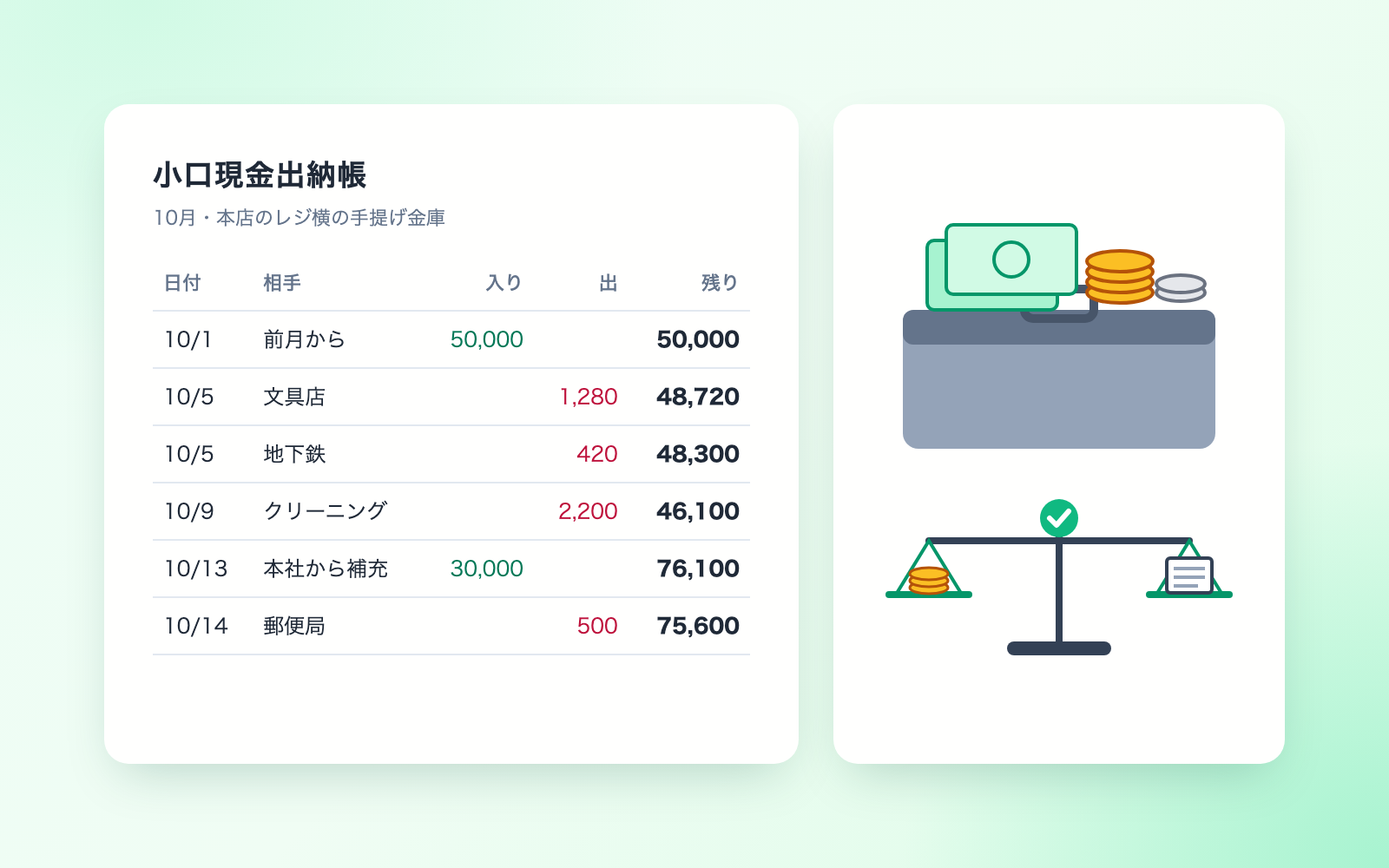
Turn spoken entries into a ledger, checked against counted cash
shuto-shinoda2026/10/28
 Received Invoice Check KitFree
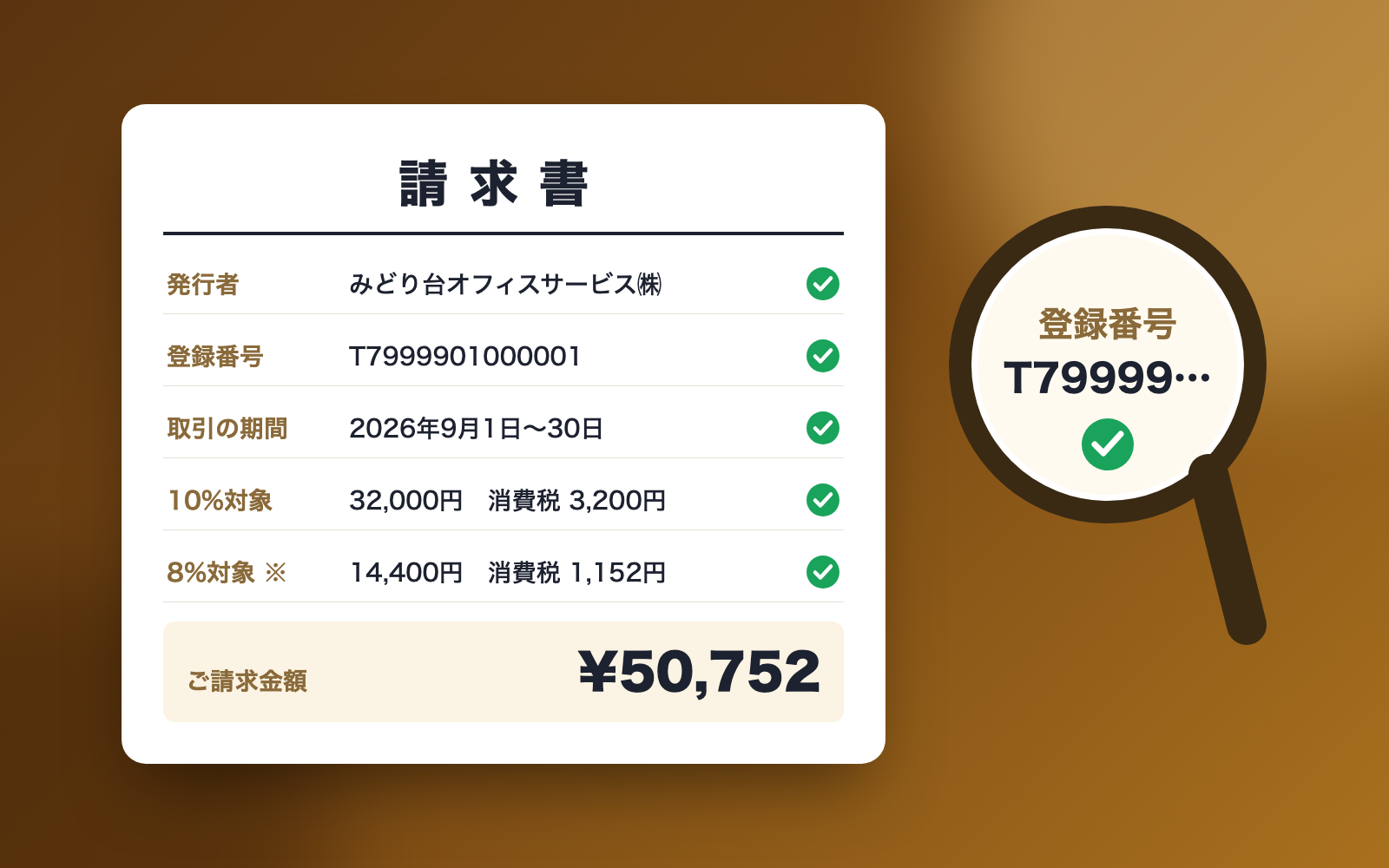
Checks invoices for compliance, then saves and logs them
shuto-shinoda2026/10/28