Consumption Tax Method Choice Kit
Tell it your sales and purchases, compare 4 tax methods period by period
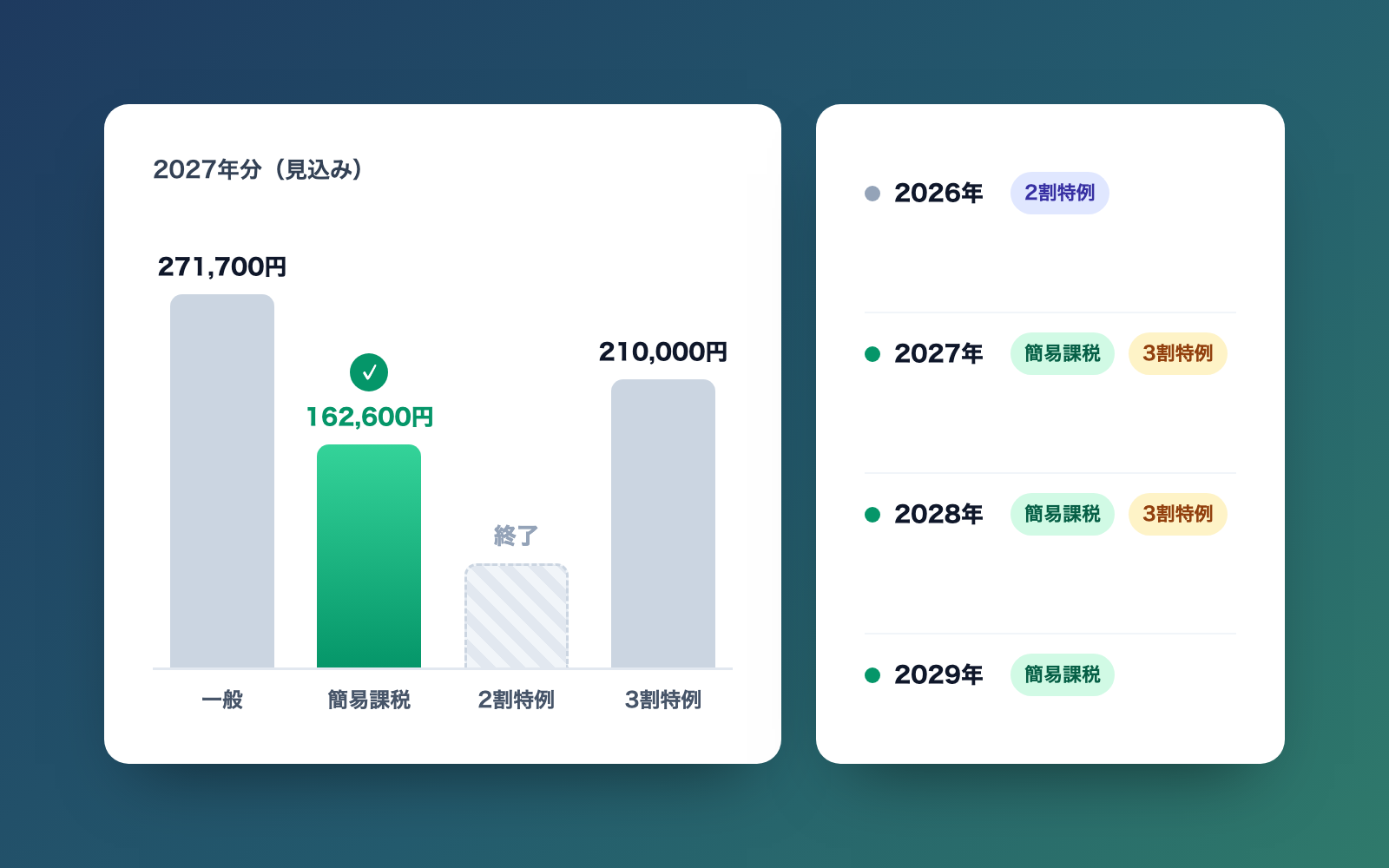
Consumption Tax Method Choice Kit is a vibe coding kit for Claude Code and Codex. Tell it your sales and purchases, compare 4 tax methods period by period. It includes 6 fixes for pitfalls the maker hit in real work. Free.
When this helps
The 20% special scheme is ending, but it's unclear whether simplified, standard, or the 30% scheme costs less
What it does
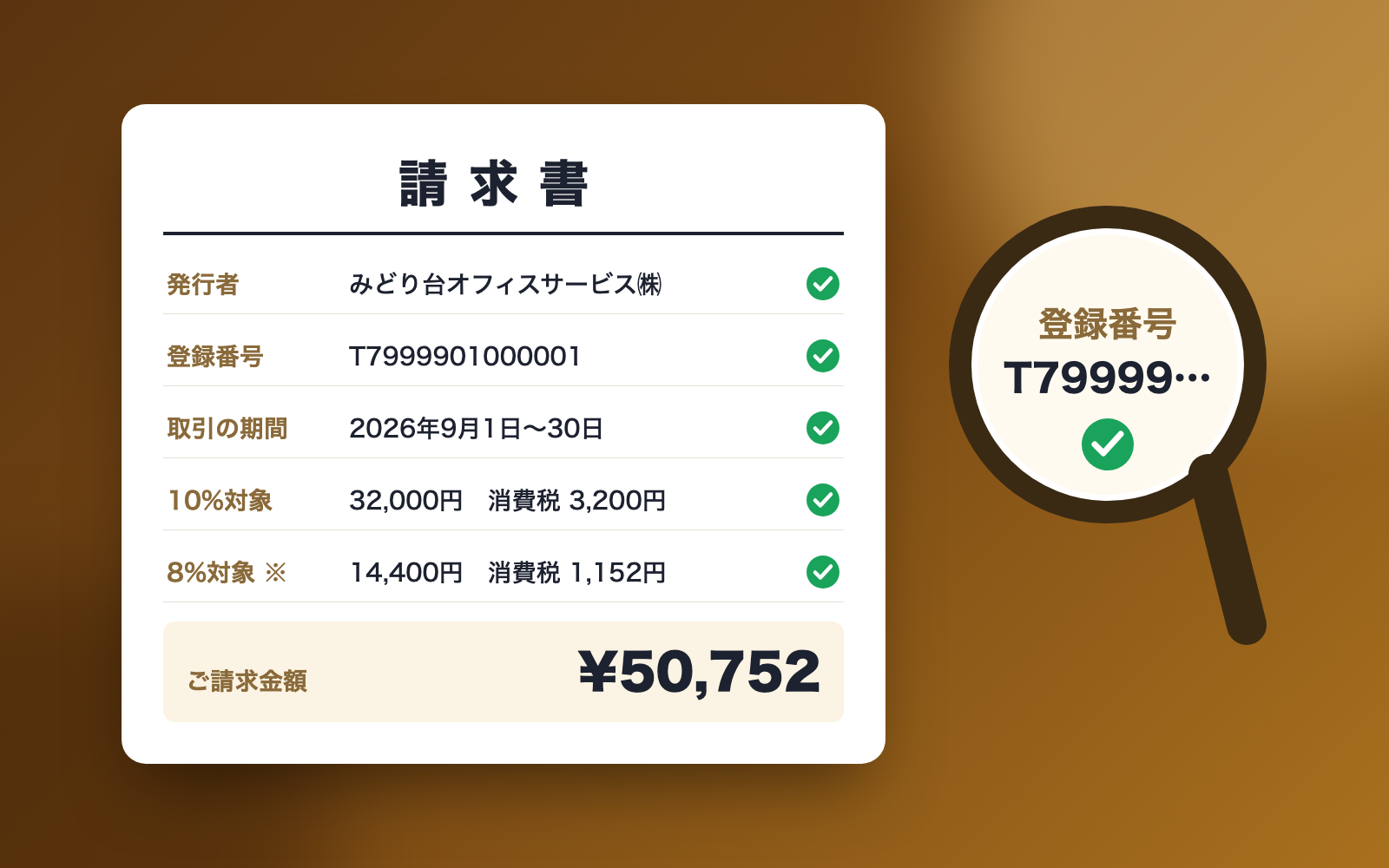
Tell it your sales by business type and purchases/expenses by invoice status, and it builds a table comparing the standard calculation, simplified taxation, the 20% special scheme and the 30% special scheme, period by period. It lists filing deadlines and next steps in date order. Points worth checking — an unknown base-period revenue, an uncertain business type, purchases with unclear invoice status — get flagged, and anything uncertain is counted on the side that costs more. It also builds an advisor memo for your tax accountant from only the allowed fields. It does not decide which method to file under or whether to submit a notification.
The fixes baked into this kit
- The simplified-taxation filing deadline had changedUnder the FY2026 tax reform, the deadline to file for simplified taxation right after the 20% special scheme changed from "the last day of the period" to "the filing deadline" — but only for periods ending on or after October 1, 2026. The tax agency's official filing guide still showed the old wording. The kit now splits the rule in two based on when the period ends.
- Notification deadlines don't shift for holidaysFiling deadlines move when they land on a weekend or holiday, but deadlines worded as "the day before the first day" for simplified-taxation notifications never do. The kit keeps the two kinds of deadlines separate instead of treating them the same way.
- The deduction rate for invoice-less purchases had been revisedA planned 50% deduction rate for purchases without an invoice, due to start in October 2026, had been revised up to 70%. The kit decides the rate from the purchase date, and uses the lower rate whenever an undated purchase could fall on either side of a period boundary.
- Revenue from a tax-exempt year shouldn't have tax stripped outRemoving tax from revenue earned in a year when the business was tax-exempt makes the ¥10 million threshold look easier to clear than it really is. The kit never strips tax from an exempt year, and treats a year of unknown status the same way.
- Certain supplier wording gets misread as "wholesale"A retailer described as "buying from a wholesaler and selling to consumers" was being classified as wholesale itself, which gives a 90% deemed-purchase rate and understates the simplified-taxation estimate. The kit no longer applies a supplier's own description to the business being classified, and uses the lower rate whenever more than one classification could apply.
- An unverified base-year revenue can make the costliest method look cheapestWhen revenue from two years earlier is unknown, the standard calculation can look like the cheapest option even though the 20% scheme or simplified taxation — which need that figure confirmed — would actually cost less. The kit now labels this "cheapest among what's confirmed usable" and lists the amounts that might turn out lower.
What's inside
- A table comparing 4 tax calculations by period (standard, simplified, 20% scheme, 30% scheme)
- A list of filing deadlines and what to do next, in date order
- Checks that flag things worth confirming (uncertain business-type classification, purchases with unclear invoice status, etc.)
- A way to build an advisor memo for your tax accountant using only the fields it's allowed to include
- A log you append to, recording notifications filed and which method you filed under
- A list of the laws and tax-agency sources it relies on, with the date each was checked
- A way to try it end to end with fictional examples (a sole proprietor's shop, a company's design firm)
- Detection of "instructions aimed at the AI" hidden in pasted text, with a warning
File list (38)
- .gitignore
- AGENTS.md
- CLAUDE.md
- KIT.md
- NOTES.md
- data/README.md
- output/README.md
- rules/CHECK.md
- rules/FLOW.md
- rules/LAW.md
- rules/PROMPTS.md
- rules/SPEC.md
- rules/TONE.md
- samples/nokishita-zuan.json
- samples/temarigusa-zakka.json
- tools/clean.mjs
- tools/compare.mjs
- tools/days.mjs
- tools/done.mjs
- tools/lib/calc.mjs
- tools/lib/guard.mjs
- tools/lib/injection.mjs
- tools/lib/kubun.mjs
- tools/lib/law.mjs
- tools/lib/log.mjs
- tools/lib/paths.mjs
- tools/lib/plan.mjs
- tools/lib/read.mjs
- tools/lib/render.mjs
- tools/lib/result.mjs
- tools/lib/show.mjs
- tools/paste.mjs
- tools/ready.mjs
- tools/selftest.mjs
- tools/share.mjs
- tools/show.mjs
- tools/try.mjs
- work/README.md
The first three decisions
- Individual or company (and fiscal year-end if a company)
- The date you registered for invoices
- This period's sales by business type, and purchases/expenses by invoice status
What you need
- No extra costClaude Code or CodexBoth CLAUDE.md and AGENTS.md are included
- No extra costNode.js 18 or laterOnly used to run the kit's tools. Nothing else needs installing
- No extra costThis period's total sales, purchases and expensesEstimates are more accurate when split by business type and by invoice status
How to use
Just paste this into your AI.
I want to use the nice to have kit "Consumption Tax Method Choice Kit". Follow https://nicetohave.app/en/g/M2ABZEPX-•••••••••• and set it up.
Works the same in Claude Code or Codex.
Read what this tells your AI to do, before you paste it
If you would rather take the files yourself
Paste the line above and your AI fetches it. If your AI cannot fetch it, or you would rather download it yourself, start here.
- Unpack the zip you downloaded
- Open the resulting folder in Claude Code or Codex (in VS Code, "Open Folder")
- Type "start building with this kit". The instructions are inside (Claude Code reads
CLAUDE.md, Codex readsAGENTS.md)
FAQ
- Can a company use the 30% special scheme too?
- No. The 30% special scheme is only for individual proprietors, and only for the 2027 and 2028 tax years. After the 20% special scheme ends, a company moves to simplified taxation or the standard calculation.
- Does the kit file the tax return or notifications for me?
- No, it doesn't create or submit them — you always do that yourself, via e-Tax, mail or in person. What the kit produces is the comparison table, the deadlines, and the advisor memo.
- What should I actually send to my tax accountant?
- It recommends sending only the advisor memo found under "for your accountant" on the results page. If you also want to share the internal-only comparison table, it shows what would become visible before placing a copy.
- Can I enter my Individual Number or bank account details?
- You don't need to. If any appear in what you type, they are masked in the saved copy and never appear in the finished documents.
- Does it already factor in the proposed cut to the food tax rate?
- No — that proposal isn't law yet, so it calculates using the current rate. If it looks like it would apply to you, a flag appears at the top of the results page.
Reviews
This is your kit. You can also see its reviews on your page.
No reviews yet. Be the first to say something.
Supporters
Once support opens, the people who backed this kit will be listed here.
- Publisher
 shuto-shinoda
- Published
- 2026/10/28
- Price
- Free
- Category
- Delegate work
- Personal data
- Handled
- Security review
- Needed (depends what you handle)
- What's inside
More kits
shuto-shinoda2026/10/28
 Petty Cash Ledger KitFree
Turn spoken entries into a ledger, checked against counted cash
shuto-shinoda2026/10/28
 Received Invoice Check KitFree
Checks invoices for compliance, then saves and logs them
shuto-shinoda2026/10/28